 Stories in Structure
Introduction
I understand your confusion. We were supposed to talk about graphs, and here I am, talking about rock climbing and climbing routes instead. I am a climber. Be it indoors or outdoors, be it rocks or mountains — doesn’t matter too much. But I’m not going to talk about climbing per se. Instead, let me show you where you can find graphs in this sport.
From Rock to Graph
It is still (kinda) warm outside, so let’s enjoy the sunshine and inspect this rock below.
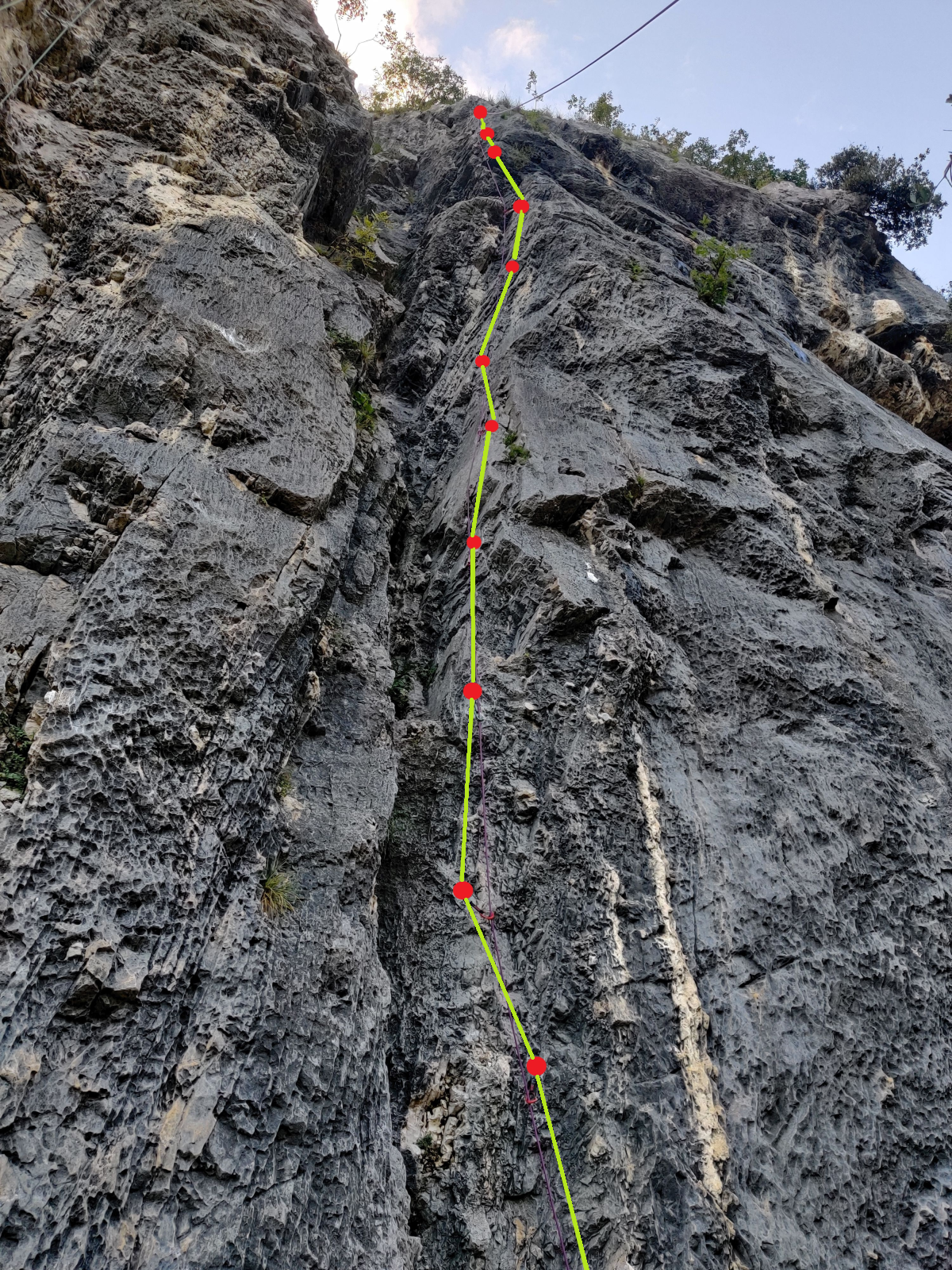
Figure 1: Route “Pesce d’Aprile”, Massone - Sector A, Arco, Italy. More show-off photos available on the Planet Mountain website.
I gave you no other choice but to notice the graph immediately — you can easily spot the red nodes and lime edges.
The red nodes are where metal bolts are located. These bolts are part of the climber’s safety system: you clip the rope into them using a climbing quickdraw. In principle, if you accidentally fall, the last bolt clipped into is what you’ll be hanging from.
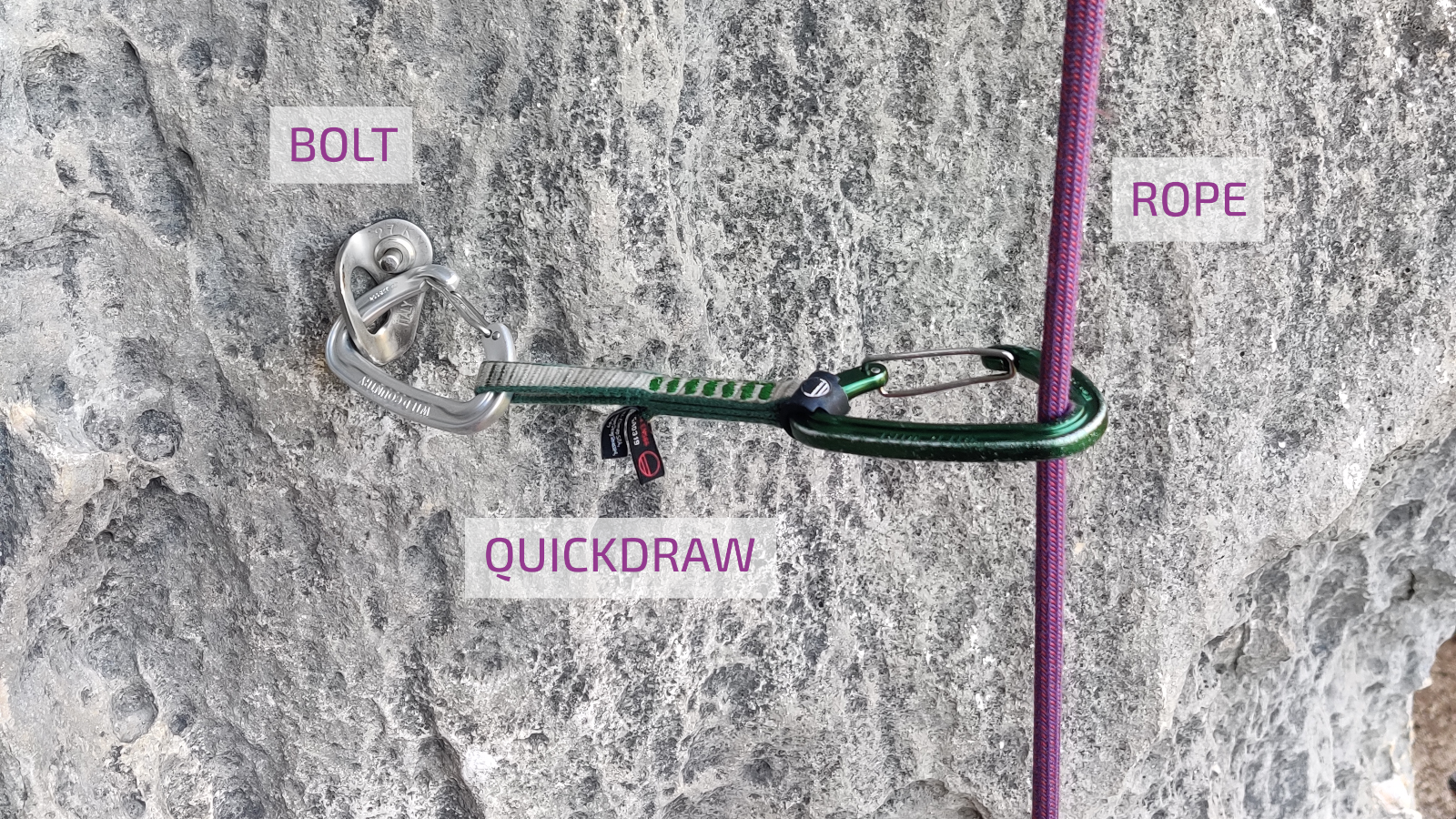
Figure 2: Climbing security system — bolts, quickdraws, and rope.
Bolts are conceptually connected by the imaginary path that goes from one bolt to the next. This path gives the climber an idea of where the route goes and guides them on which direction to take next.
When a climber ascends the route, the rope connects each bolt in sequence — and the imaginary graph becomes traversed.
In that moment, the graph stops being abstract. You’re not just observing the structure — you’re moving through it, edge by edge.
Recap on Graphs
Let’s look back at what we’ve talked about in the introductory post on graphs. What can we tell about this graph?
We observe a simple structure: two end nodes have degree 1, and all the nodes in between have degree 2. It’s a textbook example of a path graph (Gross and Yellen, 2003, p.18). A path graph is a type of tree, and all the nodes and edges can be laid out on a straight line — like the rope a climber takes from the bottom to the top.
Since there are exactly two nodes with odd degree, there exists an Euler path in this graph (see the introductory post on graphs!) That’s good news, because Euler’s theorem proves that getting to the top is doable! (Now it is “merely” a matter of one’s skills…)
Finally, is it a directed graph? It’s a bit of a philosophical question. Typically, one would go up, in which case — yes. But you can’t really prevent anyone from going down if they wish. Unusual? Sure. Impossible? Definitely not.
Conclusion
When we map a climbing route, we’re not just building a graph — we’re building a specific kind of graph: a path graph.
You could say that climbing is about traversing an abstract graph and turning it into a concrete one — from its root to its head.
Finally, you’ve probably noticed that the graphs discussed in this post are sparse, with few nodes and few edges. Next time, we’ll go to extremes and strip away all the edges 😱 We’ll explore point clouds and how to generate them using Structure from Motion.